

Libya’s Heritage and Environmental Significance
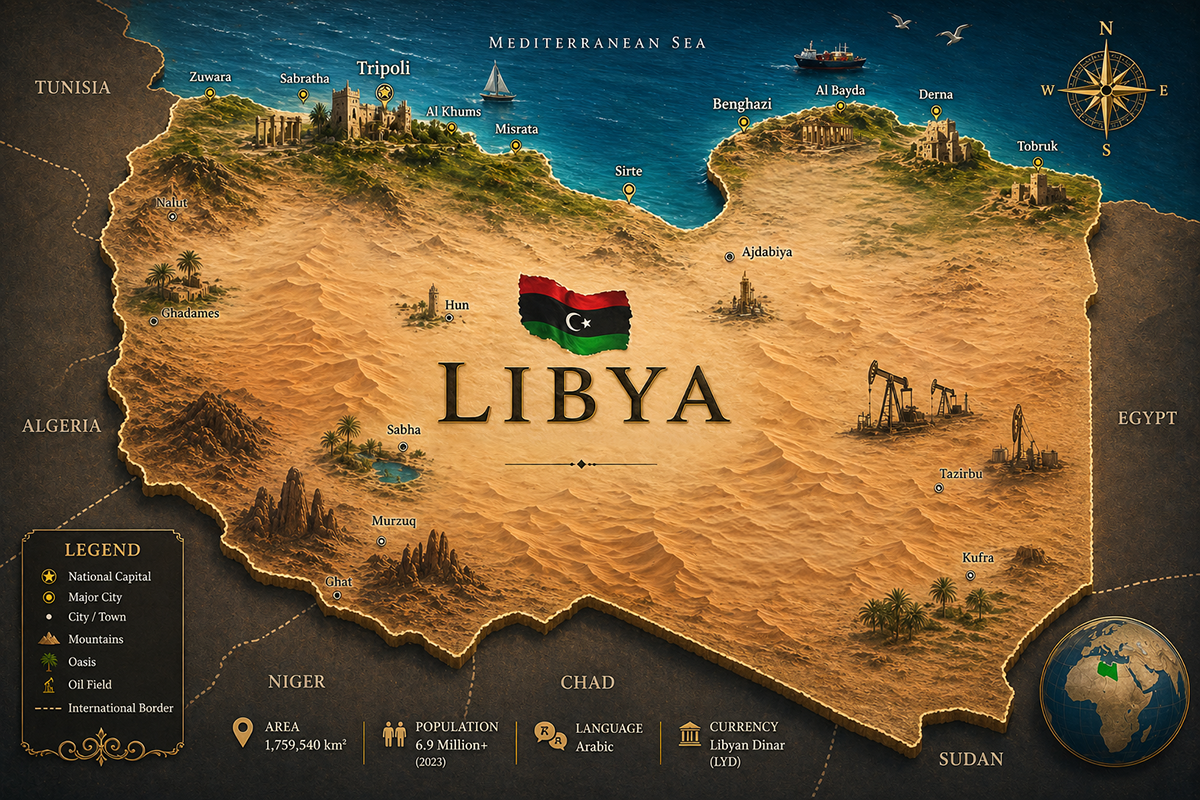

Libya possesses an exceptional wealth of environmental and heritage assets that place it among countries of particular importance in the fields of heritage protection and biodiversity conservation. The country is home to five UNESCO World Heritage Sites, in addition to hundreds of registered archaeological sites and thousands of additional sites that still require scientific documentation, reflecting the scale and depth of Libya’s civilizational heritage.
Libya also hosts significant biodiversity, including hundreds of wildlife species, among them rare and endangered species, as well as natural areas that serve as ecologically sensitive habitats of high conservation value. This highlights the importance of strengthening conservation programs and environmental monitoring systems to ensure the long-term sustainability of these resources.
These indicators reflect the scale of Libya’s national responsibility in safeguarding its environmental and heritage resources, not only as national assets but also as part of the world’s shared natural and cultural heritage. This further reinforces Libya’s role as an active partner in international efforts aimed at biodiversity conservation and the protection of humanity’s cultural heritage.

